
Tech
Lightweighting of logistics equipment How can aluminum CNC parts reduce transportation costs by 30%

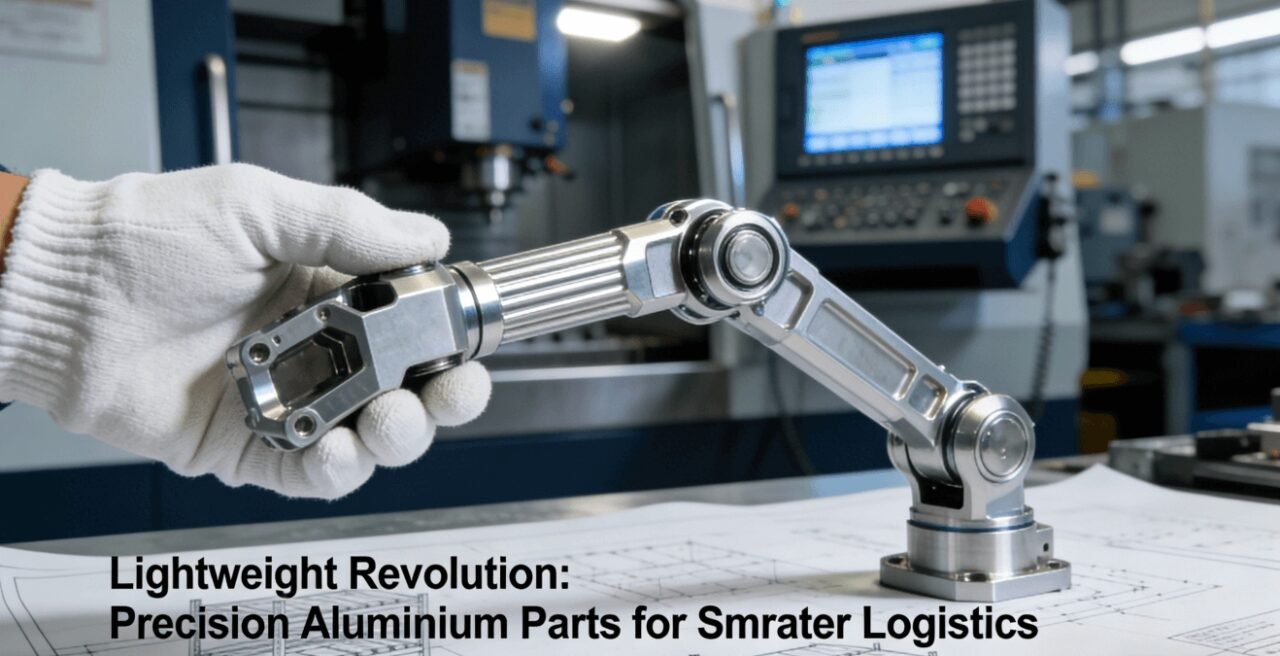
The transportation and logistics industry operates on razor-thin margins, where operational efficiency is paramount. A persistent and significant pain point is relentless cost pressure, with fuel expenses alone consuming 25-30% of operating budgets. The weight of transportation equipment directly and dramatically impacts this metric, influencing fuel consumption, payload capacity, and carbon emissions. The core issue lies in traditional manufacturing: heavy steel components, while durable, contribute excessive mass, limiting efficiency and often suffering from manufacturing imprecision that compromises long-term reliability.
This article presents a transformative solution: leveraging Aluminium CNC Turning technology for the lightweighting of critical logistics components. This approach ensures structural integrity while achieving significant weight reduction, thereby boosting overall operational performance. The following sections will detail how this precision manufacturing process is revolutionizing transportation logistics services.
How Does Aluminium CNC Turning Achieve a 30% Lightweighting Improvement in Logistics Equipment?
Achieving substantial weight reduction in logistics equipment is not merely a material substitution but a calculated engineering strategy centered on superior material properties and advanced fabrication. Aluminum alloys, notably the 6061 series, offer a density of approximately 2.7 g/cm³—about one-third that of steel (7.85 g/cm³)—while maintaining an excellent strength-to-weight ratio. This fundamental property allows designers to replace heavier steel parts with lighter aluminum ones without sacrificing necessary performance.
The enabling technology is CNC turning center machining. These sophisticated computer-controlled lathes can precisely sculpt aluminum billets into complex, high-tolerance geometries. Components such as truck linkage parts, robotic joint arms for automated warehouses, and bearing housings for conveyor systems can be optimized with thin walls, strategic hollows, and organic shapes. This design freedom removes every gram of non-essential material while reinforcing stress-critical areas, pushing lightweighting to its practical limits.
The operational impact is quantifiable. Data from the Chartered Institute of Logistics and Transport (CILT) in their report “Economic Benefit Analysis of Lightweight Logistics Equipment”indicates that a 10% reduction in vehicle weight can improve fuel efficiency by 6-8%. Therefore, a holistic 30% lightweighting through aluminium CNC turning parts can translate to dramatic fuel savings and increased payload capacity for fleets. Furthermore, production under an ISO 9001-certified quality management system guarantees batch-to-batch consistency, ensuring every component meets the stringent demands of modern transportation logistics services.
Why Does Precision CNC Turning Enhance the Reliability and Lifespan of Logistics Equipment?
Logistics equipment endures constant vibration, shock, and cyclical loading. In such harsh environments, component failure is often rooted in poor fit, premature wear, or environmental degradation. Precision CNC turning directly addresses these failure modes by elevating the intrinsic quality and accuracy of each part.
The Macro Impact of Micro-Tolerances
The cornerstone of reliability is precision fit. CNC precision turning achieves tolerances as tight as ±0.005mm. For critical interfacing components like transmission shafts, hydraulic manifold blocks, or steering knuckles, this level of accuracy ensures optimal clearance and alignment. Perfect fits minimize fretting, reduce stress concentrations, and prevent the abnormal wear that leads to premature failure, resulting in smoother operation and less downtime.
Surface Engineering for Harsh Realities
Enhancing Hardness and Wear Resistance
Beyond dimensional accuracy, surface treatments are critical. Processes like anodizing or hard-coat anodizing create a hard, ceramic-like oxide layer on the surface of aluminium CNC turning parts. This layer significantly increases surface hardness and abrasion resistance, which is vital for parts like conveyor guide rails or robotic gripper components that experience constant friction.
Superior Corrosion Protection
Logistics assets face rain, road salt, and coastal saline atmospheres. A properly sealed anodic layer provides exceptional corrosion resistance, far surpassing untreated aluminum or even plated steel. This protection is essential for port machinery components and seals in cold chain transportation logistics services, preventing rust and degradation that could compromise safety and function. The pursuit of such durability mirrors the attention to detail required in other precision applications, such as CNC machining bronze for high-wear, corrosion-resistant bushings and bearings (learn more about precision in non-ferrous machining).
Case in Point: From Data to Proof
A practical demonstration involves a logistics fleet that replaced traditional steel steering knuckles with precision CNC turning aluminum versions. The result was a 35% reduction in component weight. More importantly, the enhanced dimensional accuracy and surface durability extended the maintenance interval for that assembly from 30,000 kilometers to 50,000 kilometers, directly reducing maintenance costs and vehicle out-of-service time.
How Does China CNC Turning Technology Meet Global Logistics Equipment Manufacturing Standards?
In today’s globalized supply chain, china CNC turning parts are integral to the manufacturing strategies of international logistics OEMs. This confidence is built on the technological parity and rigorous quality systems now standard among China’s top-tier manufacturers.
Leading workshops are equipped with advanced multi-axis CNC turning center and mill-turn centers from global leaders like Japan’s FANUC and Germany’s DMG MORI. This hardware parity ensures the capability to produce complex, high-precision components. The true differentiator, however, is the adoption of stringent international quality management systems. Certifications like IATF 16949 (automotive) and AS9100D (aerospace), with their emphasis on defect prevention, risk management, and full traceability, are increasingly common. These frameworks mandate standardized processes from material certification and in-process inspection to final audit, ensuring every batch of parts consistently meets global specifications. As noted in a Society of Manufacturing Engineers (SME) technical report, “Global Precision Manufacturing Capability Assessment,”Chinese precision manufacturers are winning international trust through “standard alignment” and “process control,” making them reliable partners for transportation logistics services worldwide.
How Should Logistics Enterprises Select a Suitable CNC Turning Supplier?
Choosing the right manufacturing partner is critical. Logistics companies and OEMs should evaluate potential CNC turning suppliers against a framework that addresses both technical capability and industry-specific needs.
Assessing Core Competencies
The evaluation must start with technical capability. Does the supplier possess multi-axis and mill-turn CNC turning center capable of handling complex part geometries? Equally important is their quality foundation, verified by certifications like ISO 9001 or IATF 16949, which demonstrate a commitment to systematic quality management and are essential for producing reliable aluminium CNC turning parts.
Focusing on Industry-Specific Needs
Rapid Response and Flexible Capacity
The logistics sector often faces urgent repair part needs or prototype runs. A superior supplier must demonstrate flexible production scheduling and the ability to expedite orders, offering lead times as short as 3-7 days for critical components to minimize fleet downtime.
The Value of Design for Manufacturability (DFM) Services
A truly collaborative partner offers more than just machining; they provide CNC precision turning expertise coupled with DFM analysis. Their engineers can review designs to suggest modifications that enhance strength, further reduce weight, or simplify manufacturing—optimizing the part for both performance and cost from the outset. Partnering with a specialist like JS Precision for CNC precision turning ensures access to this value-added engineering support.
Evaluating Comprehensive Support
Finally, consider the supplier’s overall capacity, standard lead times, relevant industry case studies, and communication effectiveness. A supplier that understands the operational pressures of logistics and acts as a technical extension of your team delivers far greater value than a simple job shop.
Where Are Aluminium CNC Parts Most Widely Applied in Logistics Equipment?
Aluminium CNC turning parts are deployed across the modern logistics ecosystem, valued for their blend of lightness, strength, and precision.In over-the-road transport, lightweight aluminum brackets, hub accessories, and engine mounts are used to trim tractor and trailer weight. Within automated storage and retrieval systems (AS/RS), the arms, linkages, and actuators of robots rely on these parts for high stiffness-to-weight ratios and precise movement. For air cargo, container latches and aircraft pallet fittings made via CNC precision turning meet strict weight and reliability standards.
Port cranes and straddle carriers utilize precision aluminum components for control blocks and sensor mounts, where corrosion resistance is critical. In cold chain transportation logistics services, anodized aluminum latches, hinges, and sealing mechanisms ensure reliable operation in low-temperature, high-humidity environments. Suppliers adhering to international standards like ISO 14001 for environmental management further ensure the sustainability of the manufacturing process itself.
Conclusion
In summary, Aluminium CNC Turning technology presents a powerful, practical solution for the pressing need for lightweighting in the transportation and logistics industry. By synergizing advanced materials, precision manufacturing, and rigorous quality control, it delivers substantial reductions in operational costs, enhancements in equipment reliability and lifespan, and a lower environmental footprint. The adoption of international certification frameworks by leading manufacturers guarantees the standardization and consistency required for global supply chains.
Logistics equipment manufacturers and fleet operators are urged to immediately assess the lightweighting potential of their existing assets. Engaging with a professional CNC turning service provider for a customized consultation is the first step. By uploading design files for an instant quote and manufacturability analysis, companies can embark on a clear path toward significant operational optimization and cost savings.
Author Biography
This article was authored by an expert in precision manufacturing with over 15 years of experience in logistics equipment component design, specializing in cross-innovation between materials science and manufacturing processes. The expert has contributed to equipment optimization projects for several international logistics enterprises.
FAQ
Q1: Are aluminium parts strong enough for heavy-duty logistics equipment?
A: Absolutely. Modern high-strength aluminum alloys, such as 7075-T6, offer tensile strength up to 572 MPa, approaching that of many steels. Through optimized design and precision CNC machining, aluminum components can meet the strength requirements of heavy-duty applications like truck chassis and port machinery while achieving significant weight reduction.
Q2: What is the minimum order quantity (MOQ) for CNC turning?
A: Professional CNC turning suppliers typically support full-scale services from single prototypes to mass production. The MOQ can be as low as one piece, which is ideal for R&D, custom modifications, or small-batch pilot runs in logistics equipment.
Q3: What is the typical lead time for aluminium CNC parts?
A: For standard orders, the typical lead time from design confirmation to delivery is approximately 5-15 business days. Many suppliers offer expedited services, with rush orders for critical spare parts achievable in 3-7 days, depending on part complexity and surface finish requirements.
Q4: How can quality consistency be ensured for parts supplied to overseas logistics clients?
A: Selecting a supplier certified to international standards like IATF 16949 or AS9100D is key. These systems enforce standardized, documented quality control across the entire process—from raw material sourcing and in-process inspection to final release—ensuring consistent quality across all batches and production cycles.
Q5: What are the advantages of CNC turning compared to traditional casting?
A: Compared to casting, CNC turning offers: 1. Higher precision (down to ±0.005mm); 2. No tooling required, making it cost-effective for low-volume, high-mix production; 3. Greater design flexibility, allowing rapid design iterations; 4. Superior surface finish, directly from the machine tool. These characteristics make it ideal for the diverse, high-specification part manufacturing needs of the logistics sector.


Homeowners: What Key Questions to Ask When Hiring a Plumber Near Me

How Hiring a Local Plumber Transforms Emergency Plumbing Situations

High School Students: Key Considerations in Evaluating Scholarship Options

FintechZoom.com Markets: Latest Trends and Financial Insights

هنتاوي.com: The Ultimate Platform for Success
