
Health
Why Virtual Reality is Outperforming Traditional Surgical Training

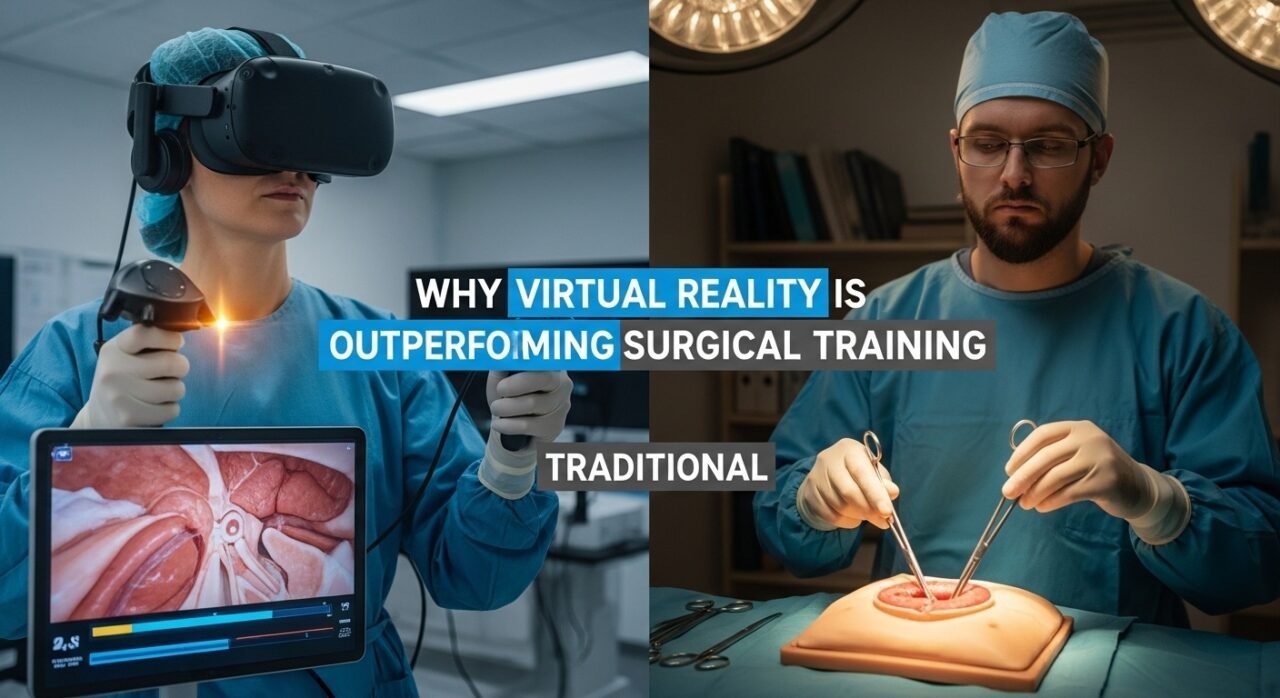
For decades, the path to becoming a surgeon was paved with six simple, high-pressure words: “See one, do one, teach one.” It’s a rite of passage that has shaped generations of doctors, but let’s be honest: the world has changed. In an era defined by skyrocketing costs, crushing administrative workloads, and an absolute “zero-room-for-error” approach to patient safety, this old-school apprenticeship is reaching its breaking point.
This is where virtual reality in healthcare is stepping in to bridge the gap. We’re moving past the days when immersive tech was just a cool experimental supplement; today, it’s actively outperforming traditional ways. From the anatomy lab to the digital headset, the surgical theater is undergoing a high-tech evolution that prioritizes both the doctor’s mastery and the patient’s well-being.
Moving Beyond the Limits of the “See One, Do One” Model
Standard medical training increasingly faces substantial logistic and financial obstacles. Physical bioskills labs are costly, often exceeding $4,000 per trainee, and demand significant travel with extensive cleanup. Moreover, resident work-hour limits and increasing administrative paperwork mean new doctors often participate in fewer live procedures than previous generations.
A significant weakness of the established model is the risk inherent in on-the-job learning. In a live surgery, errors cannot be reversed. Virtual medical education eliminates danger by creating a zero-risk setting where trainees can fail safely. Making mistakes in a simulated space allows learners to master the necessary skills before treating a patient.
Building High-Fidelity Competency and Spatial Intelligence
Reading a book or watching a video involves passive learning, yet VR medical simulation for students requires intense, active participation. Advanced VR does more than imitate visuals; it incorporates high-resolution haptics and physics-based software to mimic the actual pressure and density of tissue and bone.
Such immersion tests more than just motor skills; it develops a surgeon’s ability to think in 3D and make rapid decisions under stress. When a trainee makes an error in the simulated environment, they must immediately troubleshoot and correct it. Active involvement like this results in much deeper knowledge retention compared to simply watching.
Quantifiable Gains in Proficiency and Safety
The move toward VR is supported by solid evidence, not just appealing technology. Data shows that surgeons trained using VR experience up to a 50% decrease in critical complications when measured against those trained conventionally.
Increased speed is also a key advantage. Immersive learning helps residents achieve technical mastery approximately 30% faster. Since they can repeat difficult steps indefinitely without the expense of new biological supplies, trainees meet a specified quality standard based on objective metrics rather than relying on subjective “adequate” evaluations.
The Economic Case for Scalable Training
From a leadership standpoint, the financial argument for VR is clear. A single investment in equipment replaces the ongoing, high expenses associated with bioskills labs and associated travel.
Beyond immediate savings, well-prepared surgeons contribute to:
- Shorter surgical times
- Less reliance on anesthesia
- Fewer in-procedure adjustments
Moreover, VR democratizes high-quality training. It removes geographical barriers, ensuring that a practitioner in a remote clinic or a developing country can access the exact same elite training courses as a surgeon working at a large city teaching hospital.
Learn More Information About Virtual Reality in Healthcare Today
The future of the operating room is digital, data-driven, and safer than ever before. As we continue to integrate immersive technology into the curriculum, the gap between trainee and expert continues to shrink.

What to Look for in an Online Chess Platform

How to Choose the Best Dog Daycare for Your Pet in Miami

The Mechanics of Authenticity: Understanding How an AI Detector Functions

هنتاوي.com: The Ultimate Platform for Success

FintechZoom.com Markets: Latest Trends and Financial Insights
